Assignment Five
Here is my written project:
OCA – Photography 3 – Learning Log
Assignment Notes
After feedback from my tutor on my introduction and my first chapter (assignment three), I revisited them to work on the advice.
My introduction is tailored to introduce the topic and provide a very brief account of what I intend to do.
My first chapter has been amended and looks at the reasoning behind how the inequality spread in the art world and into landscape photography.
In my second chapter, I look at the male gaze and how I think it has influenced society and our perception of landscape photography. I believe the male gaze plays a part in our perception of the landscape. We are use to seeing images by male photographers, we are effectively seeing the world through a male perspective. I looked at how some female artists are addressing the male gaze, they are contrasting their work against Ansel Adams’ landscapes to highlight their female gaze. I believe this is an important part to look into as it looks at how we see landscape images, the hidden sub-conscious narrative within them and how female artists are using their work to highlight a gendered gaze.
In my third chapter, I put forward an idea that could be implemented to help fight the inequality effectively. I looked at how galleries can help the immediate problem. I then look into pedagogy and how this could effectively be used to teach the next generation and stop inequality across the board. I believe pedagogy would be a tremendous step in helping gender inequality not just in landscape photography, but it would help the inequality in everyday life. It would be beneficial for the generations to come.
In my conclusion, I bring everything together and bring my work to a close.
I have set-out my document with a cover page, which includes my name, student number, title, and word counts with and without quotations. Next I have my contents page, then the introduction, chapter one, chapter two, chapter three, conclusion, references list, figures list and then the bibliography.
My research has aided in my assignment and has formed the bulk of my research folder. My research has taken many forms, from books and journals, to websites and information pamphlets.
Here is a link to my research folder page, which includes a full bibliography:
Word Count
The limit for this essay is 5000 words +/- 10%. Before I submitted my first draft, I have 6594 words excluding quotes etc. It was quite a lot over. But I did have leeway and scope to cut it down. I contacted my tutor to ask whether I should cut the word count down before submitting or in light of feedback. She advised to make multiple sweeps of my work and cut out where possible or rephrase sentences so they are smaller. I have now down this and managed to get down to 5489 words, which is in the 10% leeway.
Assignment Four
Here is my fourth assignment which is the first draft of my 5000 word essay:
Rework
I have reworked my assignment based on the feedback from my tutor. My tutor found that I had done the work, but it was evidenced in my research tab, I was advised to use this and discuss how it related to my work, which I have done.
I have looked into three books that look at gender equality and have summarised and analysed them.
Here is my reworked assignment:
Preparation and Commentary
This assignment required me to give a rough guide for the chapter titles and their contents and also provide a sample of around 1000 words from my essay.
I started off by thinking about the research I have done and the themes that researcher had covered. I then thought about what I wanted to cover. Landscape is quite a niche area of art in general. The majority of the research covers art in general. Some of this research will be useful for my work as it will be applicable in this field. I wrote down the common themes and areas. I found the research covered certain areas like what caused the inequality, some talked about peoples experiences with it; whilst there was a lack of research on solutions to the problem. Most said it is a difficult thing to overcome, but none had in-depth workable solutions. I think because fighting against inequality in the world and fighting against inequality in the arts are very similar, one has influenced and caused the others, different methods and solutions must be utilised.
I came up with three chapters which will form the body of my work. The introduction will be approximately 250 words, the conclusion being the same. My chapters will be approximately 1500 words.
I decided that in my first chapter I will look at the causes of the inequality. This chapter will be a lot more general, as there are causes which have influenced landscape photography but are also direct causes in the wider art world, and indeed the whole world. Whilst some causes can be directly linked to landscape photography, others have influenced its course.
The second chapter will look at effects that this inequality has had on women and in landscape photography itself. This will look more directly at the inequality in landscape photography. I will look at what effect this has had on the demography of photography and its effect on women. I will look how this has effected the general population as well. I believe this will be an important aspect of my research as whilst we can see how the inequality in landscape photography presents itself, we don’t see the effect that it has on everyone else.
My last chapter will look at solutions to the problem. I propose a comprehensive list of solutions which I will research assiduously. I have noticed a lack of substantial solutions in my research. Researchers and scholars talk about the causes and the effects but those who talk about solutions are in a minority.
I have looked at a variety of sources, including books, journals, websites, artists work and personal experiences. I have organised this research into my research folder. It is taking shape, I do need to organise it a bit better. I have printed out the resources, then I have made notes and picked out quotes and important parts on a separate page. Here is a link to my research folder page, here I will upload images showing my research. At a later date, I will upload images of my research to view online.
Here is my assignment:
Research Folder
I will use this space to upload images of my research folder. I will update it as progress is made.
Here is my research folder taking shape:
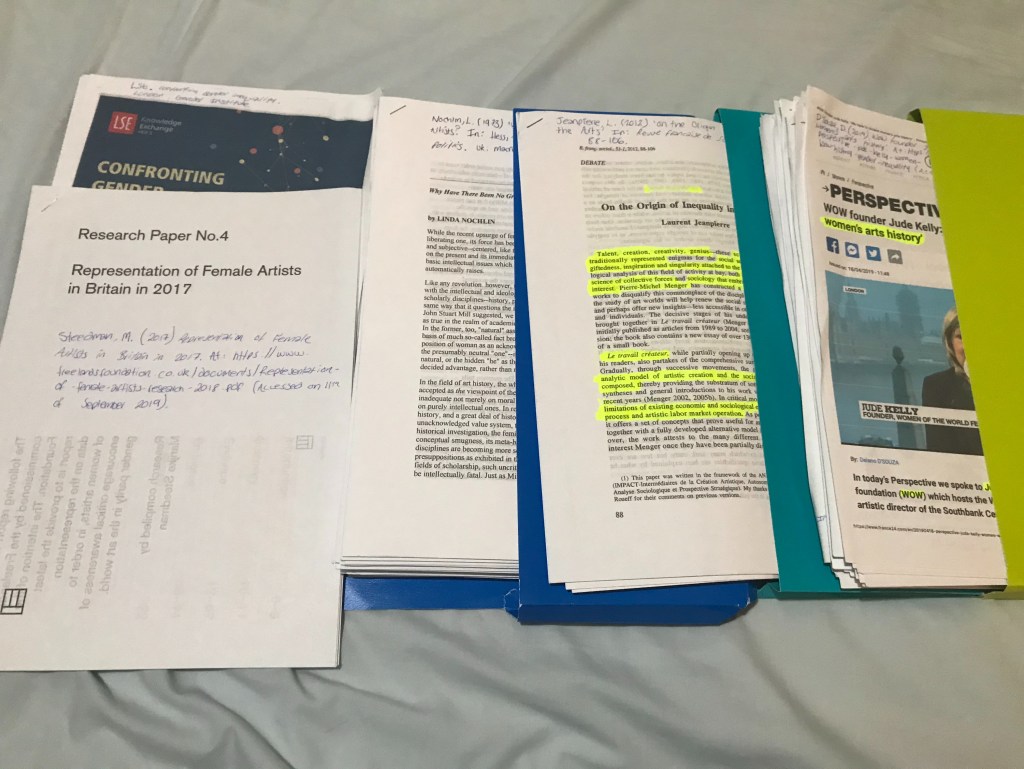
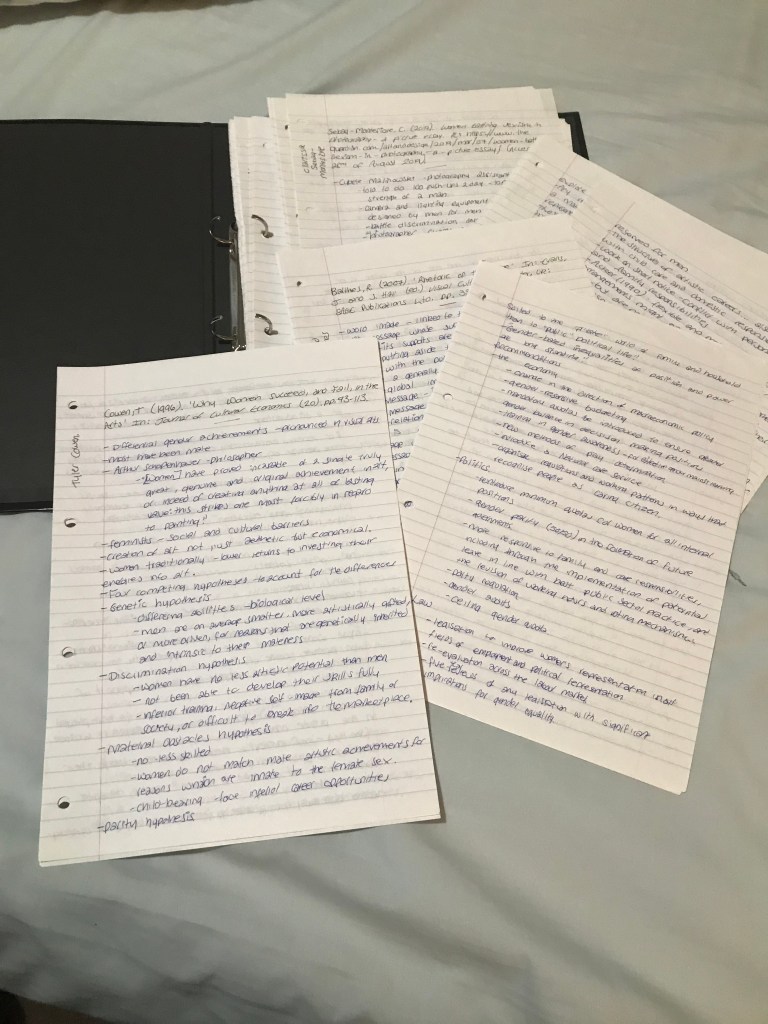
Here is the full bibliography of sources that is in my research folder, these have helped form the structure of my 5000 word essay and have been very informative in this course as a whole:
Here is an image showing my resources form books:
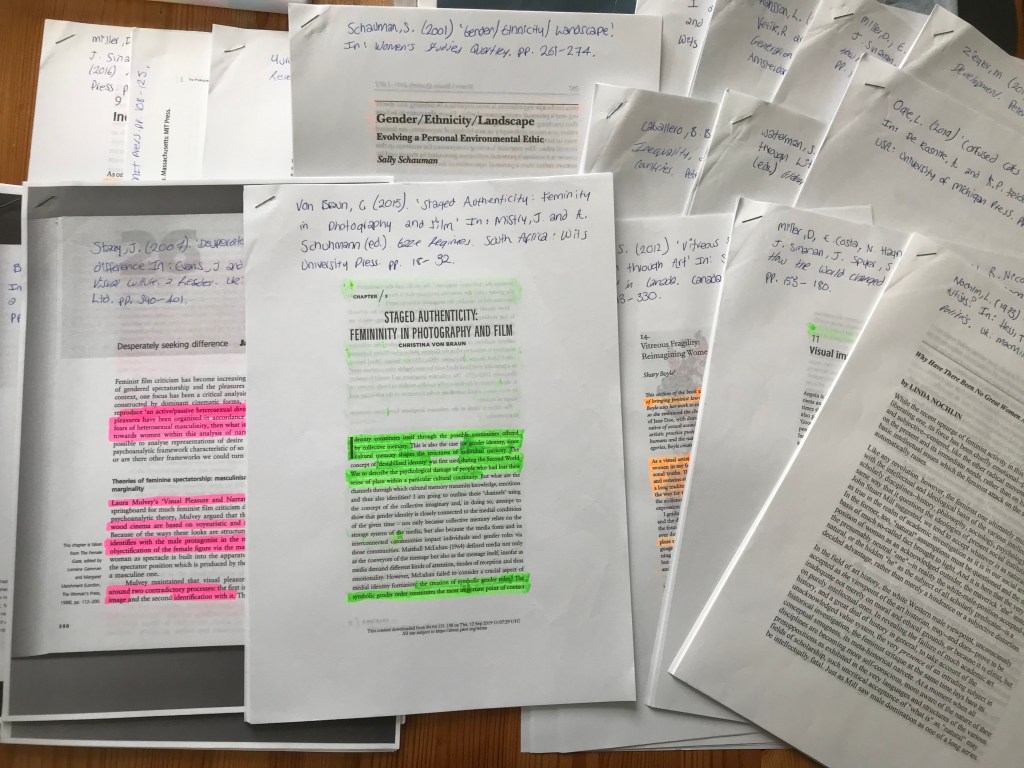
Here are the resources from Journals:
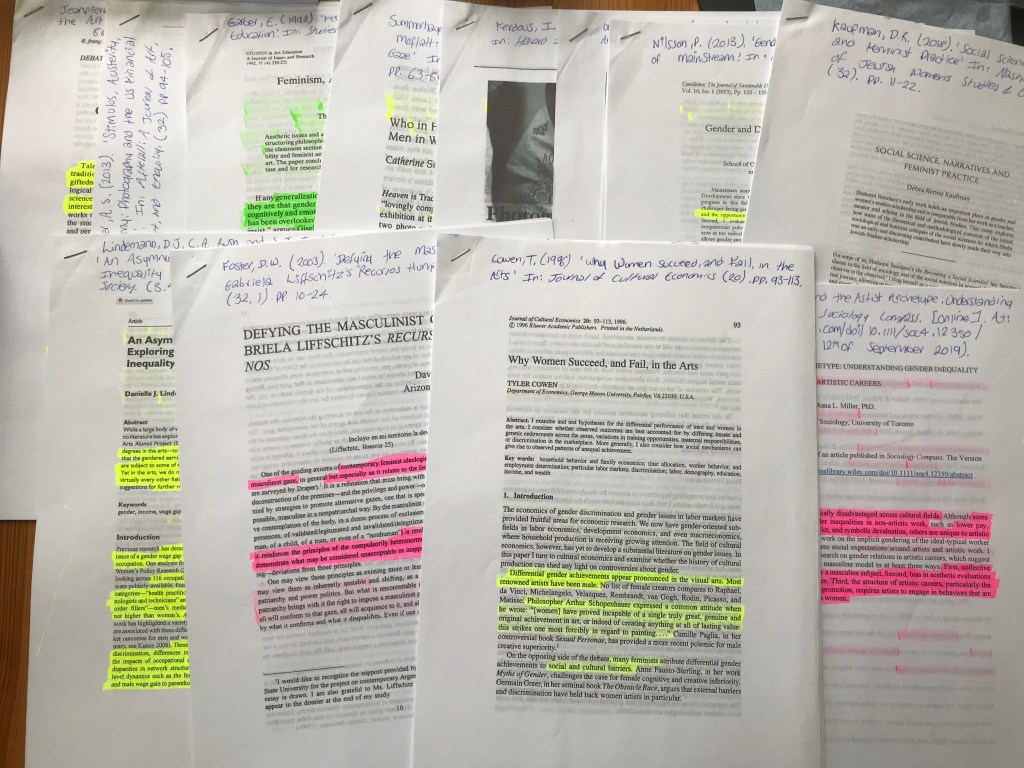
Here is the research I found on the internet:
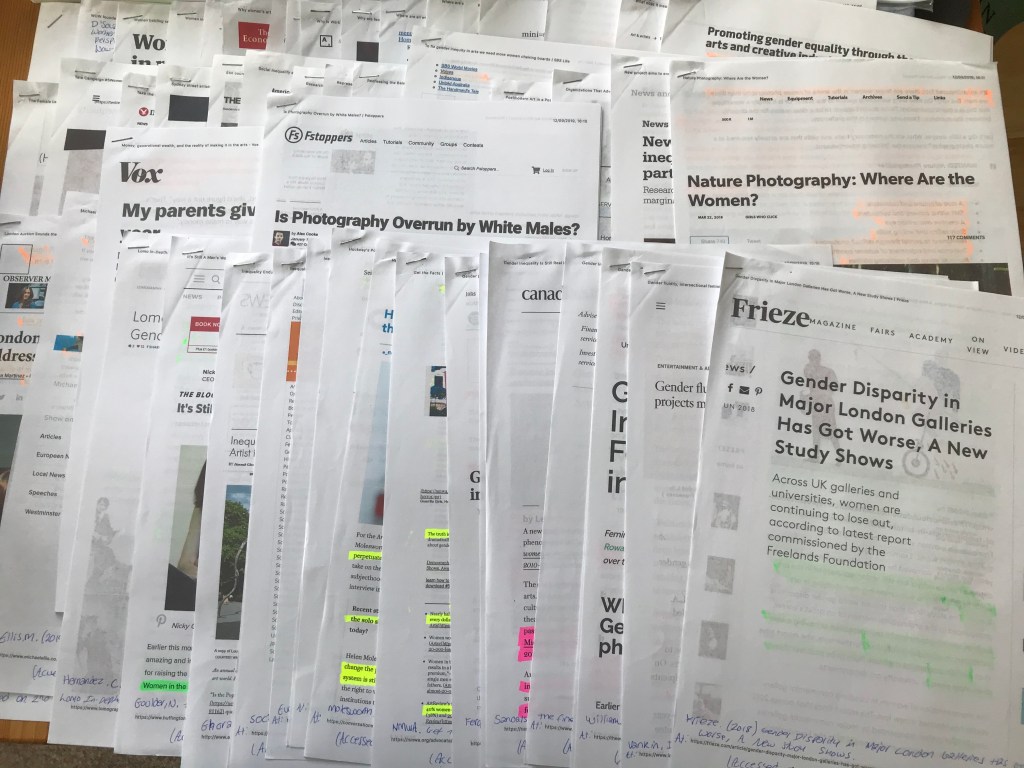
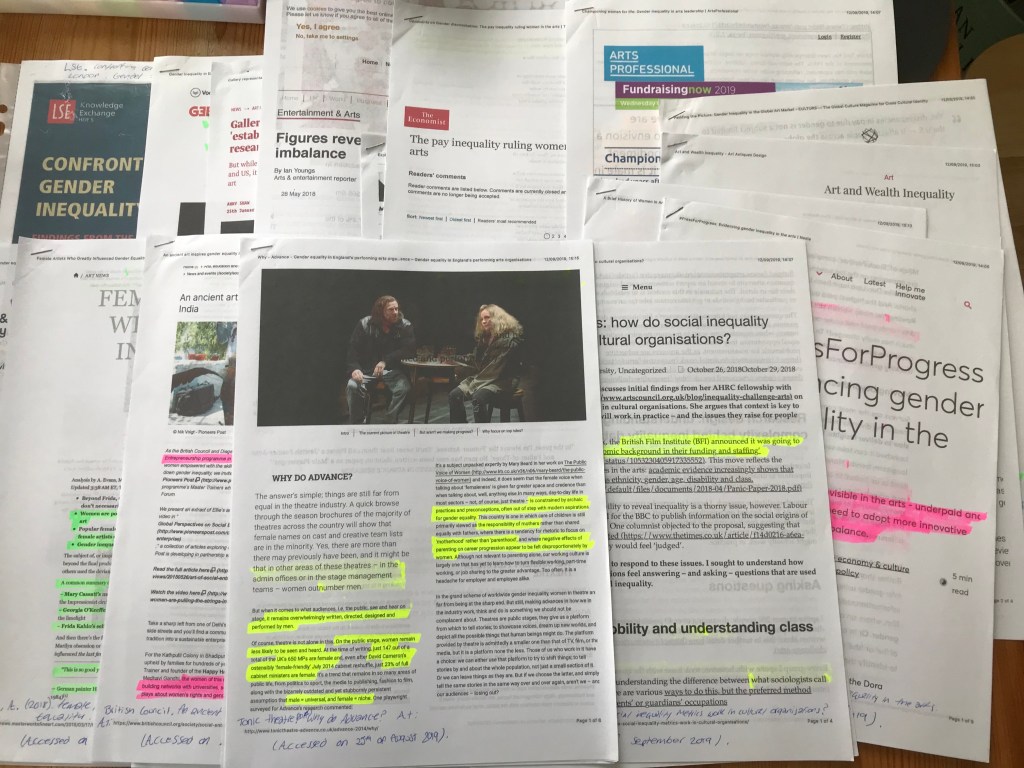
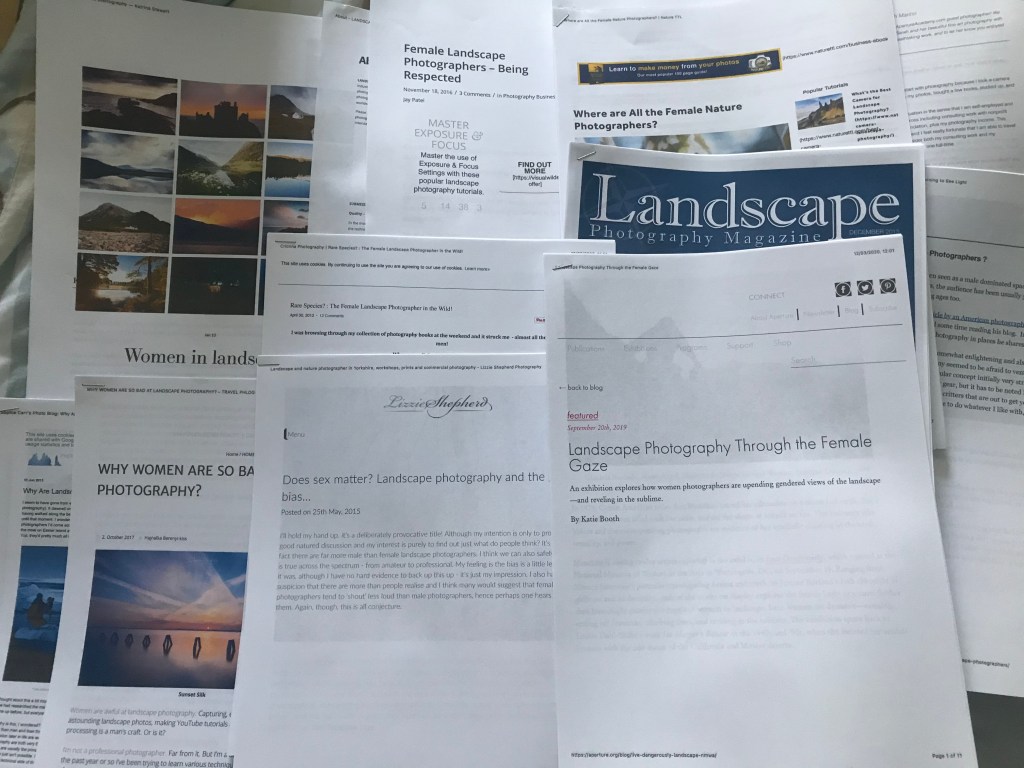
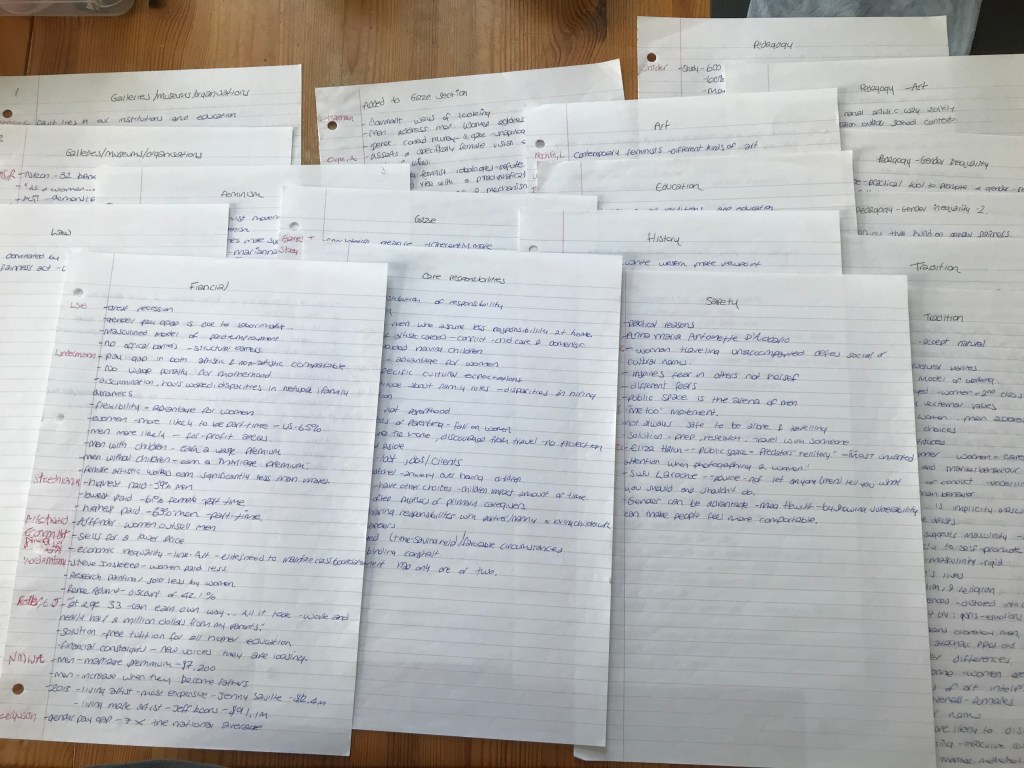
Here is a picture of a sample of my notes from the above research:
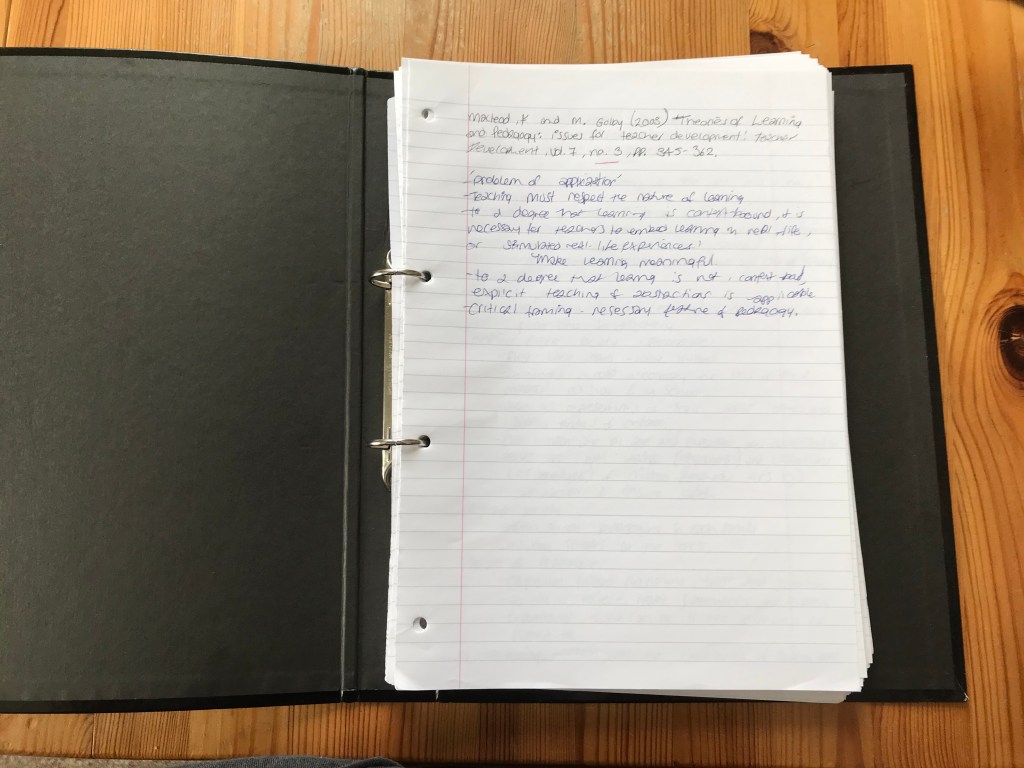
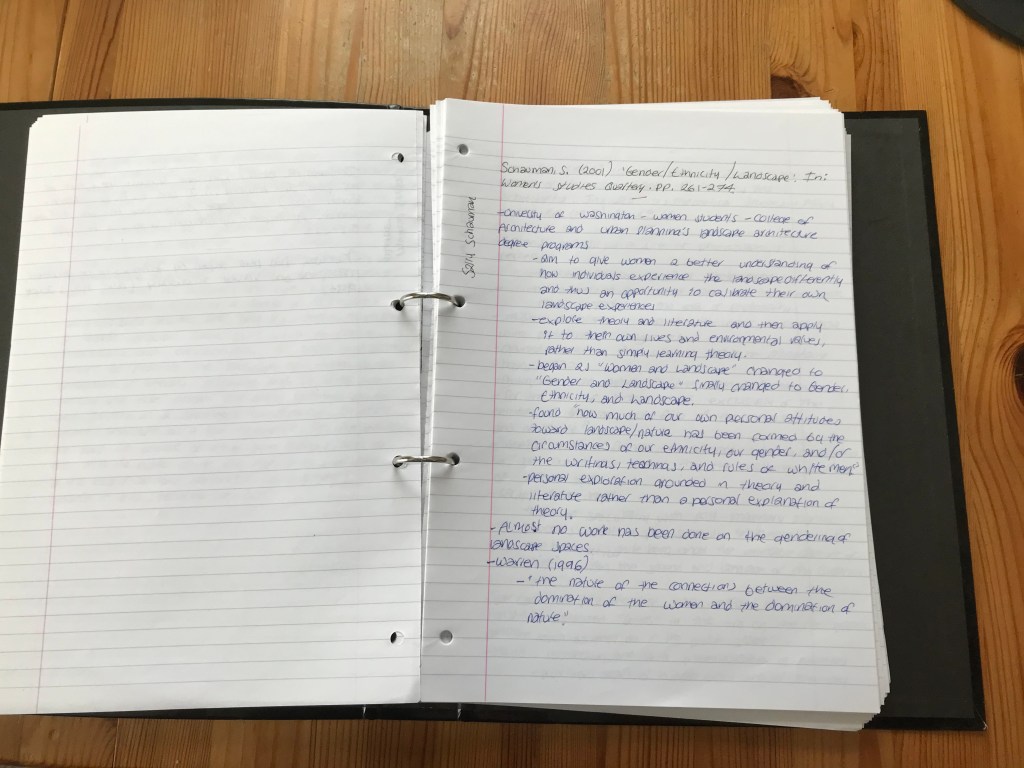
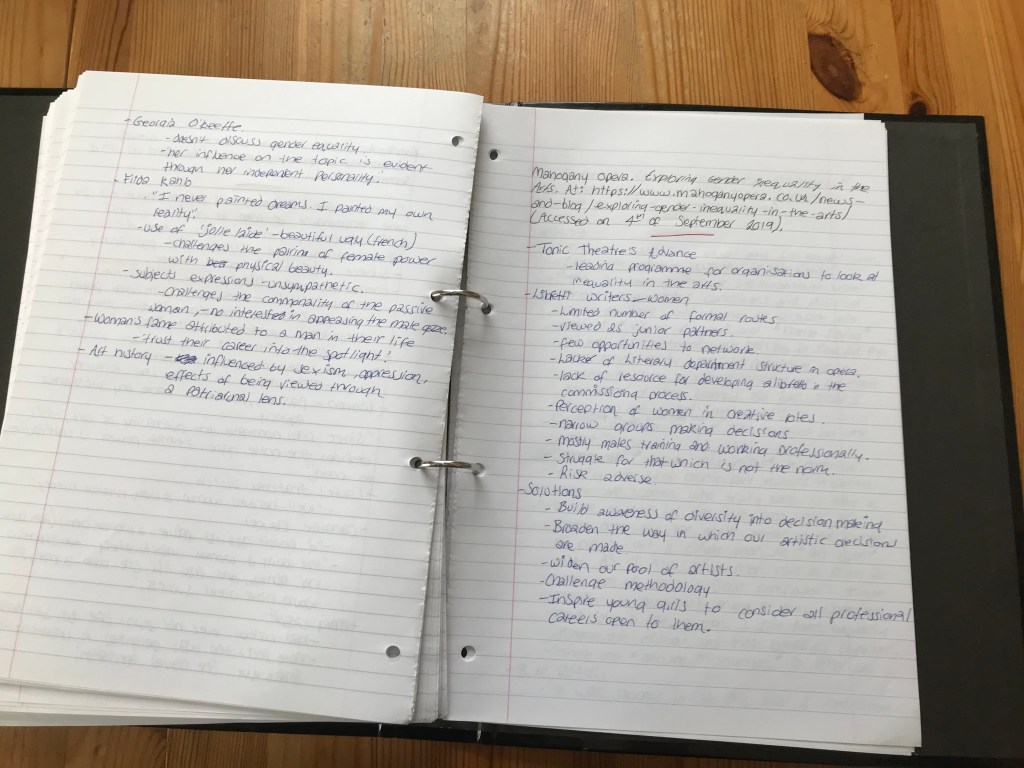
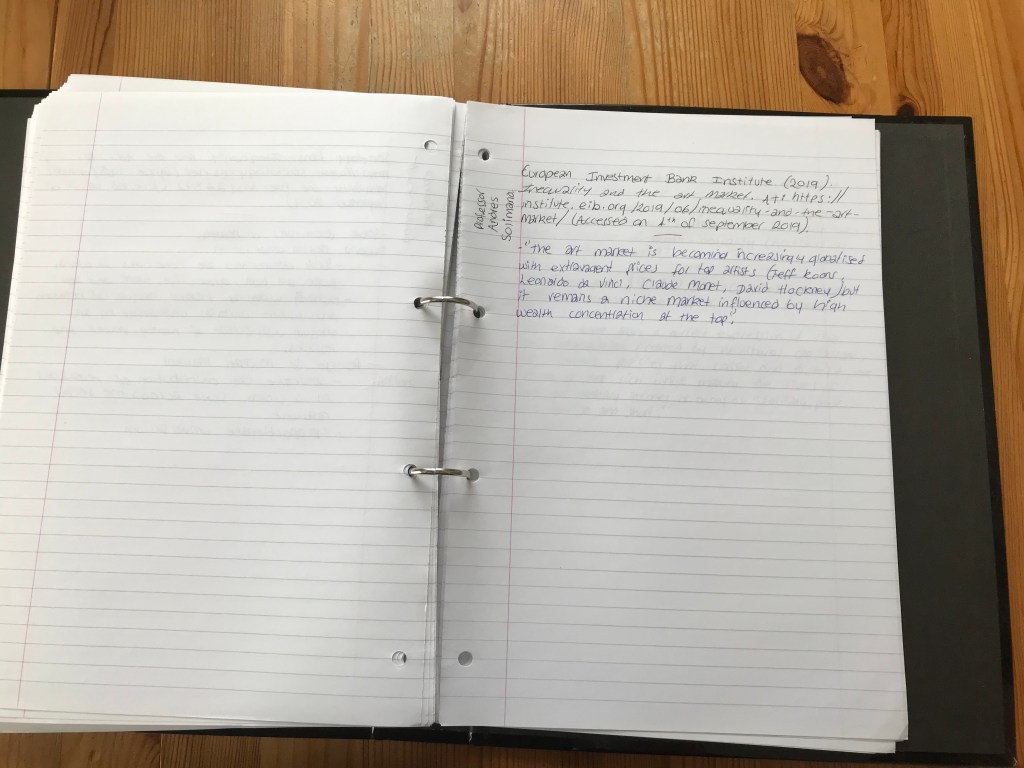
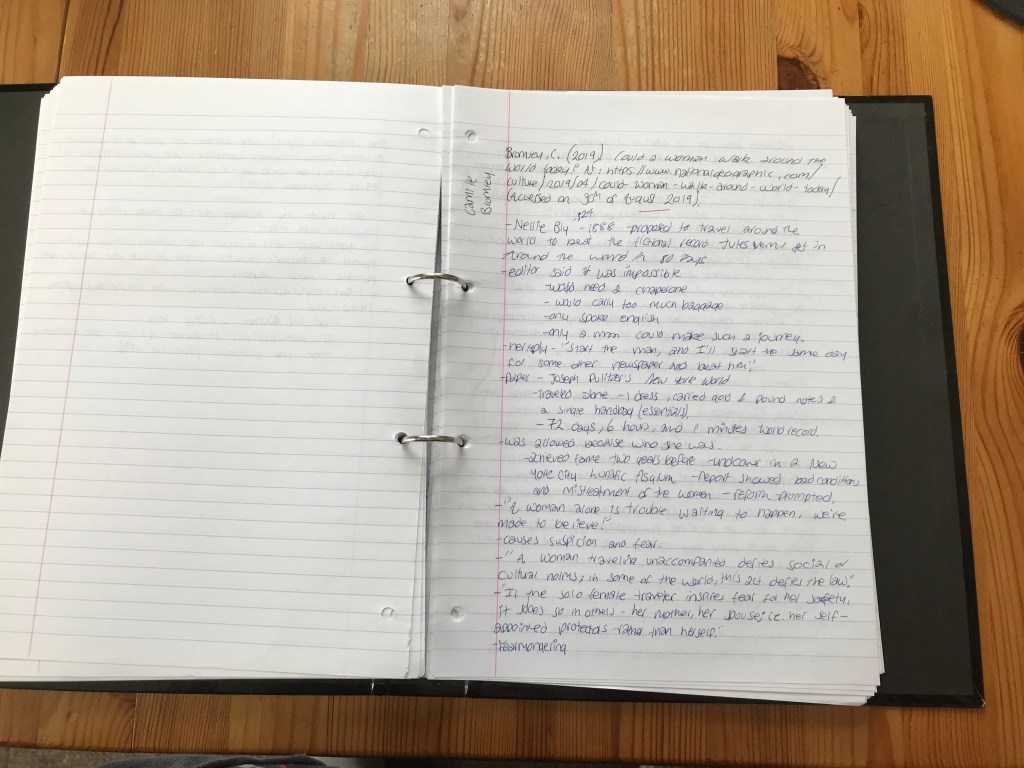

Here is how I organised my research by topic:
Butler, J (1990) Gender Trouble. Reprint, UK: Routledge, 2007.
Judith Butler, in her book, Gender Trouble, takes a postmodern standpoint which opposes the basic beliefs of feminine identity. She believes that the ‘politics of identity’ cause more harm than good in the freeing of women.
She quotes Catharine MacKinnon as saying, “Stopped as an attribute of a person, sex inequality takes the form of gender; moving as a relation between people, it take the form of sexuality. Gender emerges as the congealed form of the sexualization of inequality between men and women” (MacKinnon quoted in Butler, pp. xii). Going on this though, it is the result of a sexual hierarchy that gender is born. According to Butler, the only way gender produces identity is when people express gender (Butler, pp. 34). She sees gender as a compilation of identities, but these have no relation to our sex. Instead gender is performative. This performance aspect is based on repetition, it has to be repeated, by repeating it is reenacting something that is becoming and is already established in society (Butler, pp. 191). The fact that gender is performative, to Butler, suggests that it takes form from the repeated acts, this is its reality. Thus gender has no existential status. It’s reality is influenced by society, personal and public acts and conversations (Butler, pp. 185). This relates to gender inequality, the repetition of certain beliefs and their continued belief has create a view which is embedded deep in society. This also relates to gender roles. The repetition of the belief in gender roles coincides with human behaviour, together they create a set of beliefs which is ingrained in our society. Most of the time this behaviour is done unconsciously, probably due to the intense conditioning human have gone through over the centuries. “The view that gender is performative sought to show that what we take to be an internal essence of gender is manufactured through a sustained set of acts, posited through the gendered stylization of the body” (Butler, pp. xv). Butler believes that there is a gender reality which is born from continuous social performances, this is infect how gender inequality has taken hold (Butler, pp. 192).
Butler looks at the relationship between politics and feminist theory. She believes it is imperative that a dialect which represents women correctly and truthfully be developed. According to Butler, this should help with the problem in our cultural conditioning which is recognised to be both excluding and misrepresenting women (Butler, pp. 2). This relationship between politics and feminist theory relates to representation. The representation of women in many spheres, not only in politics, is a cause for debate. This debate leads onto my work, as the representation and expectations is one issue at the heart of gender inequality. Butlers work looks at feminine identity, whilst not completely concentrating on gender inequality, her work lends itself to this topic, as there are overlaps which make her work useful to my research.
(Butler, 1990; Stewart, G).
Peter Kennard
Peter Kennard is a British artist who is known for his political collages. He turns his attention to anything from war to climate change to economic issues. He approach is to dissect mass media images and text, and then he reassembles the image to create a new image that address and brings to light the issue he has chosen. He decided to use collages as he wanted a method that was appropriate for activism. He believes collage fits this requirement.
His image entitled Use your loaf (see fig. 1), is quite striking. It is addressing the increase in weapons. Kennard uses a picture of a loaf of bread and next to it, in contrast a missile. They are both the same size and roughly the same size. The text states, “no-one is starving from lack of weapons”, this infers this could be addressing the governments spending on weapons rather than helping their citizens. The title uses loaf, which is a metonymy for brain, which could also infer that the viewer should be thinking about this issue.

One of his most famous image was made in collaboration with Cat Phillipps. It draws attention to the invasion of Iraq. The image, called Photo Op (see fig. 2), features Tony Blair taking a selfie in front of an explosion.

“This act of re-imaging the powerful…through ripping them up, mashing them together, desecrating them and outwitting them through surreal juxtaposition, this self-initiated act of creative destruction is deeply empowering, and is born from a need to publicly express one’s own anger with and dissent from the powers that be…Through putting together an image – either digitally and/or with scissors and paste, with or without text – people get to feel a sense of empowerment, an empowerment that communicates to the viewer, be it via a placard, a street poster, or an image on social media. The act of re-using existing images and re-presenting them through juxtaposition is inherently subversive, and showed up in the countless images of Theresa May that came thick and fast in direct response to the official election campaigning day-to-day” (kennardphillipps quoted in BJP).
Figures
Fig. 1. Kennard, P (1983) Use your loaf [Photograph – Online] At: https://www.iwm.org.uk/history/6-powerful-protest-posters-by-peter-kennard(Accessed on 11th of December 2019).
Fig. 2. Kennardphillips (2005) Photo-Op [Photograph – Online] At: https://www.bjp-online.com/2017/06/kennardphillipps-on-the-power-of-political-photomontage/(Accessed on 11th of December 2019).
Bibliography
BJP (2017) kennardphillipps on the power of political photomontage. At: https://www.bjp-online.com/2017/06/kennardphillipps-on-the-power-of-political-photomontage/ (Accessed on 11th of December 2019).
IWM (2018) 6 Powerful protest posters by Peter Kennard. At: https://www.iwm.org.uk/history/6-powerful-protest-posters-by-peter-kennard/(Accessed on 11th of December 2019).
PHF. Peter Kennard. At: https://www.phf.org.uk/artist/peter-Kennard/ (Accessed on 11th of December 2019).
Linder Sterling
Linder Sterling is a British artist who is known for her feminist collages. She has been influenced from the Manchester Punk scene during the 1970s. This aided in her work and possibly her perspectives. She looks to commodity and gender for inspiration in her art. She uses a tradition methodology of cutting and paste images from magazines and porn. She often uses images from fashion and lifestyle magazine in combination with image of women in porn. Her work is popular, in 2018 she created a 85 metre billboard at Southwark station; she was commissioned by Art on the Underground.
This image (see fig. 1) was used on the music group, the Buzzcocks album cover. This image was created by Sterling. She combined an image of a women naked with an image of an iron. The women is standing in a provocative way, with her arms raised and her hip jutted to the side. Her head has been replaced with an iron. The iron is pointing upwards, in line with where her head should be. Sterling has placed an image of a mouth smiling over the woman’s nipples. There is a noticeable comparison between the shiny plastic and metal of the iron with the woman’s skin which has been oiled. Her image is simple, only being made up of four piece but it is effective and does make the viewer think.

Figures
Fig. 1. Sterling, L (1976) Untitled [Photograph – Online]. At: https://www.tate.org.uk/art/artworks/Linder-untitled-t12501 (Accessed on 11th of December 2019).
Bibliography
Manchester, E (2007) Untitled 1976. At: https://www.tate.org.uk/art/artworks/Linder-untitled-t12501 (Accessed on 11th of December 2019).
Tate. Linder. At: https://www.tate.org.uk/art/artworks/Linder-10844 (Accessed on 11th of December 2019).
Margaret Harrison
Margaret Harrison is a feminist, and also self-proclaimed ‘radical artist’. Her work address issues surrounding feminism and usually takes on a humorous note. She was one of the founding members of the London Women’s Liberation Art Group. Her work has received recognition from a variety of fronts, including the police. In 1971 the police shut down her exhibition due to her representation of men. This was fatally her first solo show. “It was censored and locked down after the opening for indecency because Margaret feminized the bodies of well-known figures, including Hugh Hefner” (Sanchez quoted in Battaglia). This image that Sanchez talks about is entitled, This is only a bunny but he is quite nice really (see fig. 1). It caused a stir as Harrison had drawn Hugh Hefner as a playboy bunny. It is this type of humorous approach that marks Harrisons work. It is a good take on exactly what Hefner has created. It also allows the viewer to think about issues for women surrounding this.

Another image of Harrisons which looks at how women are objectified is called Good Enough to Eat (see fig. 2). The image shows a women laying in a sandwich. It addresses how women are viewed and are objectified. But also how people view women as an object, how an image of women are ‘eaten up’. It is a clever way to highlight this issue. By contrasting the female figure with a sandwich, it shows how easily people devour both as objects and also as something pleasurable.

I like Harrisons images as they are humorous but raise and tackle important issues. These drawings show a different method of looking at feminism.
Figures
Fig. 1. Harrison, M (1971) This is only a bunny boy but he is quite nice really [Photograph – Online]. At: www.artnews.com/2019/03/06/bunny-business-margaret-harrison-sends-up-playboy-hugh-hefner-at-the-armory-show/ (Accessed on 7th of November 2019).
Fig. 2. Harrison, M (1971) Good Enough to Eat [Drawing – Online]. At: https://www.tate.org.uk/art/artworks/harrison-good-enough-to-eat-p06246(Accessed on 7th of November 2019).
Bibliography
Battaglia, A (2019) Bunny Business: Margaret Harrison sends up playboy Hugh Hefner at the Armory Show. At: www.artnews.com/2019/03/06/bunny-business-margaret-harrison-sends-up-playboy-hugh-hefner-at-the-armory-show/ (Accessed on 7th of November 2019).
Harrison, M. Biography. At: margaret-harrison.com/?page_id=11 (Accessed on 7th of November 2019).
Harrison, M. Home. At: margaret-harrison.com (Accessed on 7th of November 2019).
 Georgina's Contextual Studies