Tutor Feedback
Here is a link to my tutor’s feedback for this assignment and also my comments and how I am responding to the feedback:
OCA – Photography 3 – Learning Log
Tutor Feedback
Here is a link to my tutor’s feedback for this assignment and also my comments and how I am responding to the feedback:
Assessment Criteria
Assignment One
Demonstration of subject based on knowledge and understanding
I have decided on my topic for my body of work. I read through the course work and decided to research each visual culture, so that way I could see which my work fits into. I made a mind map to keep my ideas together and so I could see the links. In my essay I explained why I felt my work fit into each category and even put forward an idea that my work would fit better into the postmodern feminism category.
Demonstration of research skills
I researched each visual culture in order to understand them. This allowed me to see in which my work would fit into. I feel my research is evident.
Demonstration of critical and evaluation skills
In my essay I gave reason to why my work would fit into each visual culture but I also gave my reason as to why I felt that it didn’t fit completely in. I was critical of where my work would ultimately lie. I went a step further and put forward another visual culture which I felt fitted my work better, which is postmodern feminism. It is a sub-category of postmodernism but I felt I couldn’t complete this assignment without bringing it into play.
Communication
I felt I communicated my idea plainly and in a methodological way. I spilt my work up into section so I could discuss each part before moving on. I believe I wrote my ideas out clearly and concisely.
Here is the annotated file I received back from my tutor.
Here is the feedback report.
Feedback from Annotated Work Notes
My tutor sent my essay back with annotated comments. I will look at them first.
My essay had a few grammatical errors, I did proofread but obviously missed these.
The first point is that I need to explain what and why the pilgrimage is for men. What is the journey and who sees it as a male pilgrimage. Here is a link to my research on this pilgrimage, which explains it. My wording could have been better whilst explaining in the essay, but this link will clarify things:
I made a point about the media influencing how we see and our expectations of women, my tutor says that the media has propated a established notion. They have done this subtly whilst appearing to liberate some underrepresented groups. She advised me to look a Baudrillard’s Simulacra and Simulation.
I talked briefly about religious symbols, that they have another purpose other than for worship and that is their aesthetic value. My tutor agrees and goes on to say that religions are concerned with the right way to represent the divine. This has been the cause of several conflicts for example the Byzantine Iconoclast wars and the Orthodox-Catholic Schism. I knew that the portrayal of the symbols is very important to the religion but I hadn’t heard of these wars, so it will be interesting to read about them.
I talked about my work showing a postmodern dystopia but my tutor states that I need to explain this better as my images do not show this properly yet.
I compared the images of Catherine Opie and Angel Adams. My tutor says I need to talk about why his gaze qualifies as male. She advised me to look at other female photographers of his era who used a similar approach. Here is the link to where I look into gazes:
At one point I mention Visual Culture. My tutor picked up on this and believed I meant visual culture theories. She was right, I will change this.
Formative Feedback
I received my tutor feedback report alongside my essay. This time my tutor gave written feedback as this assignment is diagnostic.
She states that my clear and often eloquent. She mentions where my proofreading failed and two issues with apostrophes. She says that my text flows well and logically. I show my intention and follow a concise argumentation path. She praised my research and referencing. But I need to explain, elaborate and analyse. This will produce a better argument when making a point.
She has provided advice in anticipation of the future assignments. Firstly about the use of quotations. Quotations should be seen as words of authority and should be used to support my work. If I use a quote which isn’t exactly on the topic, I will need to explain why I have choosen it.
When looking at an image, I need to take a similar approach to that of quotations. For future assignments, I should use the images in relation to the point I am making.
My tutor has provided a list of books to read. They are:
Marina Warner. Alone of All her Sex: The Myth and Cult of the Virgin Mary.
Jean Baudrillard. Simulacra and Simulation.
Peter Brown. “The crisis of the image: the Byzantine iconoclast controversy?” In The Rise if Western Christendom: Triumph and Diversity AD200-1000.
Victor Turner and Edith Turner. Image and Pilgrimage In Christian Culture.
My tutor believes my research proposal is viable and interesting. I need to address any issues and fine tune my topic further. She has given my seven questions to answer:
My tutor ends by stating my strengths lie in my research, methodological skills and clear writing. But I need to work on my topic being fine tuned and I need to explain, elaborate and analyse.
Responding to the Feedback
My first take home point was the grammatical errors in my work, I need to address these. I also need to work on my analysis. Whilst my worked flowed and was presented in a logical way, I need to fine tune my work further. I will take these comments on board for my next assignment.
Here are the links to the feedback pages, they are also available from the drop-down menus:
Assignment Three Tutor Feedback
Assignment Four Tutor Feedback
Preparation
I started by reading through my course work and then researching each visual culture. I created a mind-map with reasons why my body of work fits into each category. I then looked at my research and felt that my work fitted into postmodernism better than any of the others.
Here is my mind-map.
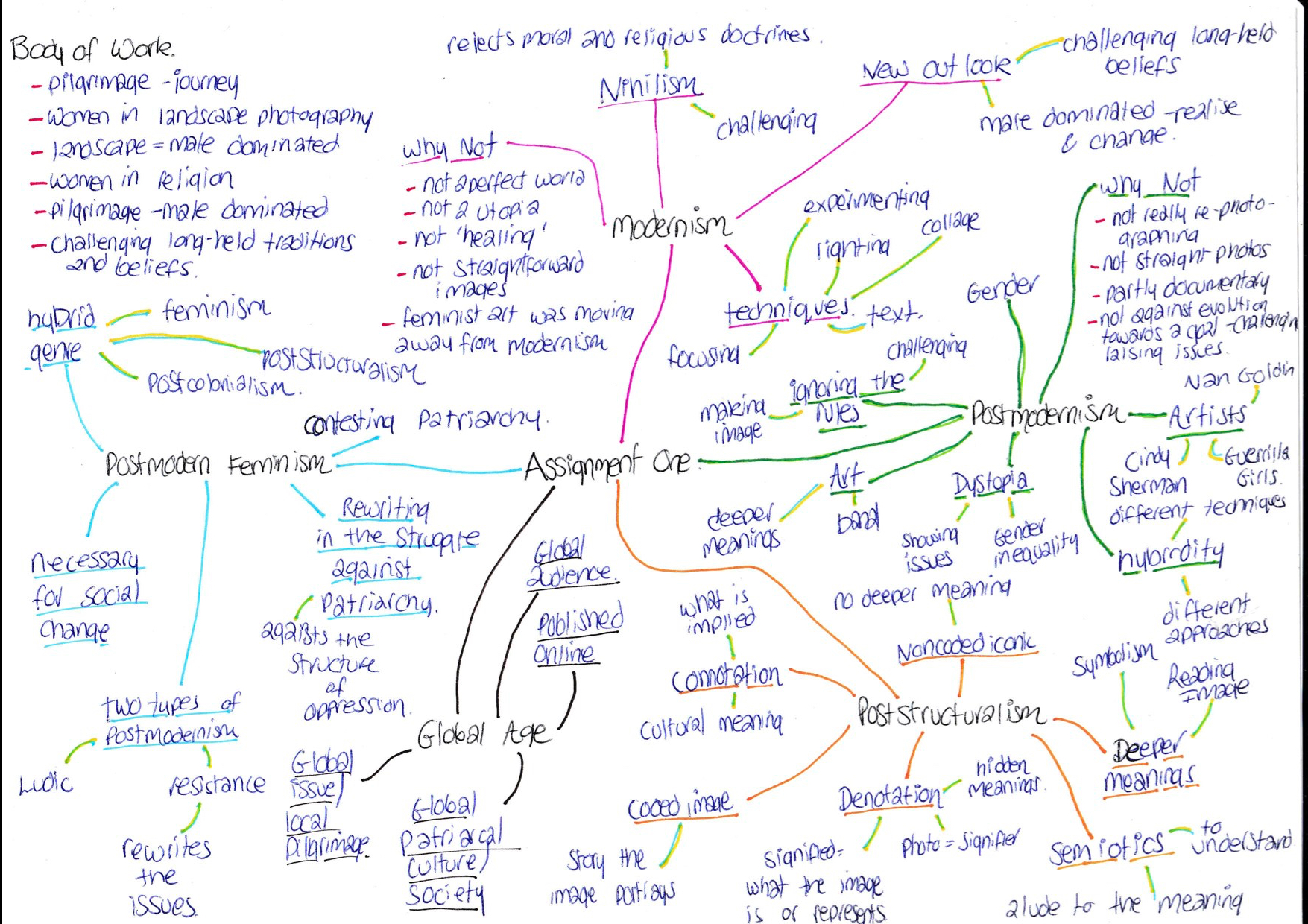
Here is a link to my research.
Reflection
I found it difficult at first to identify which visual culture work fitted into and as the word count limit was only 1000 to 1500, it was hard to fit everything in. I centred my work around postmodernism, as I felt this culture fitted my work the best. But I feel my work can be traced and linked to other visual cultures.
It is hard to define a work into a certain category, as often genres blend together. For me my work has pieces of each. One of the core aspects of modernism is nihilism, which is renunciation of values that originate from the belief of a higher power (Buchanan (2010)), but also the belief that the higher power was the primary means for progress (MDC). My body of work deals with themes of religion and feminism but I am also exploring social and cultural values. My work is not rejecting these beliefs as such but I am challenging them. So whilst I am not following nihilism fully, it has influenced my work. But on the other hand, modernism does not fit my work well, as it looks towards a better world, a new vision. I am trying to bring to light long-held beliefs and challenge them. I am not showing a utopia, which is a common theme in modernism. My images are not meant to be curative and they are not straightforward. Feminism diverged from a modernist viewpoint, so due to my work having a feminist motive, I feel it does fit a modernist label but I recognise it’s influence.
I believe my work has a place in the global age culture as I am publishing it online, it becomes accessible and aimed at a global audience. The gender inequality is a global issue, especially when we can recognise a patriarchal culture and society in our everyday lives. It effects us all, men and women. I am using a historic patriarchal local pilgrimage, teamed with a genre of photography which is notorious for it being male dominated, to bring this issue to a global audience. My images will be accessible all over the world, so I am able to show my work to a variety of cultures and societies.
But my work could fit into the poststructuralism visual culture. Postmodernism and Poststructuralism share a close relationship. Poststructuralism will be evident in my work. I hope my image will elude to a deeper meaning, one which the viewer can interpret. Denotation will be key in reading the meaning, but also the connotation will be useful, but this will vary as it is dependant on the viewers experiences (Barthes (2007), pp. 33-40).
Whilst I do believe my work fits better into the postmodern visual culture, I cannot ignore the influence from the other cultures. I think it is possible for a work to fit into multiple categories, I believe this is the case in my work.
I did struggle with this assignment at first, as I am in the very early stages of my body of work. Obviously my work will develop and may even change culture completely, but for my current direction of planning, postmodernism defines it. I did have trouble sticking to the work count. It is not a lot, and I did initially go over, so I have had to cut a bit out. Overall I think I got across what I wanted to say but I am not sure if it is completely correct. After I receive my tutor feedback and develop my work further, I could rework this assignment.
Bibliography
Art Gallery NSW. Postmodernism. At: https://www.artgallerynsw.gov.au/education/learning-resources/education-kids/photography/postmodernism (Accessed on 6th of July 2019).
Barthes, R. (2007) ‘Rhetoric of the Image’ In: Evans & Hall (ed.) Visual Culture: A Reader. London: Sage Publications Ltd. pp. 33-40.
Batchen, G. (1997). Burning with Desire: The Conception of Photography. USA: MIT Press.
Berryman, A. (2011). What is Modernism? At: https://ashleighberryman.wordpress.com/2011/01/31/what-is-modernism/ (Accessed on 6th of July 2019).
Brooks, A. (2002). Postfeminism: Feminism, Cultural Theory and Cultural Forms. London: Routledge, p. i.
Buchanan, I. (2010). ‘Nihilism’ In: A Dictionary of Critical Theory. Oxford: Oxford University Press.
Dillet, B. I. MacKenzie & R. Porter. (2013) The Edinburgh Companion To Poststructuralism. Edinburgh: Edinburgh University Press.
Ebert, T. L. (1991). ‘The “Difference” of Postmodern Feminism’. In” College English (Vol. 53, No. 8) pp. 886-904. [Online]. At: https://www.jstor.org/stable/377692 (Accessed on 16th of July 2019).
Edwards, E. & J. Hart. (2004). Photographs Objects Histories: On the materiality of Images. London: Routledge, pp. 1-15.
Encyclopaedia Britannica. ‘Poststructuralism’ [Online] At: https://www.britannica.com/art/poststructuralism (Accessed on 19th of June 2019).
Green, J. (1978). ‘Photography as Popular Culture’ In: Journal of The University Film Association. Vol. 30, No. 4. [Online]. At: https://www.jstor.org/stable/20687447 (Accessed on 10th of July 2019).
Irvine, M. Approaches to Po-Mo. At: faculty.georgetown.edu/irvinem/theory/pomo.htm/ (Accessed on 19th of June 2019).
Killen, B. (2010). Postmodernism – Deconstruction and Fine Art Photography. At: www.bobkillenphotographyblog.com/2010/06/postmodernism-deconstruction-and-fine-art-photography/ (Accessed on 10th of July 2019).
McHugh, N. A. & P. Leaman. (2007). Feminist Philosophies A-Z. Edinburgh: Edinburgh University Press, pp. 100-103.
MDC. History of Modernism. At: https://www.mdc.edu/wolfson/Academic/ArtsLetters/art-philosophy/Humanities/history_of_modernism.htm (Accessed on 19th of June 2019).
P1. (2014) Postmodernist Art and Photography. At: https://www.photographicinspirations2014.wordpress.com/2014/03.31/postmodernist-art-and-photography/ (Accessed on 6th of July 2019).
Tam, P. So Long As They Are Wild. Catherine Opie. At: Art Asia pacific.com/magazine/WebExclusive/SoLongAsTheyAreWild (Accessed on 24th of July 2019).
Tate. Art Term – Modernism. At: https://www.tate.org.uk/art/art-terms/m/modernism (Accessed on 19th of June 2019).
Tate. Art Term – Postmodernism. At: https://www.tate.org.uk/art/art-terms/p/postmodernism (Accessed on 19th of June 2019).
Tate. Catherine Opie. At: htttps://www.tate.org.uk/art/artists/Catherine-opie-4641 (Accessed on 24th of July 2019).
The Art Story. Modern Photography. At: https://www.theartstory.org/movement-modern-photography.htm (Accessed on 6th of July 2019).
Tsui, E. (2018). Yosemite in all its intimacy: feminist photographer Catherine Opie’s first solo Hong Kong show features Western landscapes. At: https://www.scmp.com/culture/arts-entertainment/articles/2147211/Yosemite-all-its-intimacy-feminist-photographer-Catherine (Accessed on 24th of July 2019).
V&A. What is Postmodernism? At: https://www.vam.ac.uk/articles/what-is-postmodernism (Accessed on 19th of June 2019).
V&A. What was Modernism? At: https://www.vam.ac.uk/articles/what-was-modernism (Accessed on 19th of June 2019).
Willette, J. S. M. (2012). Postmodernism in Photography. At: https://arthistoryunstuffed.com/postmodernism-in-photography/ (Accessed on 6th of July 2019).
Woodward, D. (2016). The Artist using Landscape to make a Bold Feminist Statement. At: https://www.anothermag.com/art-photography/8790/the-Artist-using-landscape-to-make-a-bold-feminist-statement (Accessed on 25th of July 2019).
Assignment One Research
I did research into each visual culture to see which my body of work would fit into.
Modernism paved the way for complete change in many aspects, like in literature, architecture, and in art. It is not based on one characteristic but covers a range of contributing ideas. Following the Second World War, there become a universal need for ‘healing’. People believed this could be achieve by a new outlook, this manifested in at first a change to the design of basic items like clothing. It induced a utopian feeling. This then moved into the art world. One aspect of modernism is nihilism, which rejects moral and religious doctrines. The beliefs that are born from the assumption of a higher power (Buchanan (2010)). Art is visibly different. Artists would experiment with new materials and techniques, in an aim to explore form. So basically a completely new tradition than anything before. Modernism promoted a new world view, one which was simple and uncomplicated, the perfect world, a utopia.
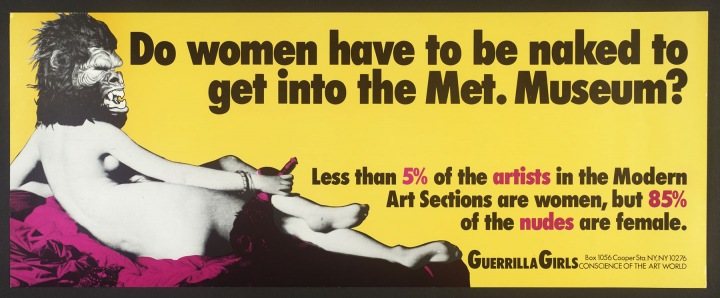
Postmodernism is a controversial movement, which is hard to pin point a definition. It spanned around two decades from the 1970s up until the 1990s. Similar to Modernism, it changed art completely, but in this instance it was a force against the modest ideals. ‘Anything goes’ is a saying that comes to mind with postmodernism, there was a complete mix of ideas. One characteristic was the bringing together of ‘cultural hybrids’, this created unique artworks. It is known for bringing together high and low culture; Cindy Sherman is an artist who is known for doing this. Another is that it is often the complete lack of subject that makes the image work, banal works well in postmodernism. If Modernism is a utopia, postmodernism is a dystopia. The Guerrilla Girls are a group of feminist artists who are known for their postmodern activist work. They wear masks in public, so no one knows who they are. They combine images with humour and facts to form a work of art with meaning. This image (see fig. 1.) highlights the issues that female artists have experienced at the MET Museum. They have used facts and imagery to make their point clear. They are feminist artists who fall into the postmodern culture (Guerrilla Girls). Postmodernism become the norm for consumerism, this was its downfall. According to J. S. M. Willette, postmodernism would be more aptly named re-photography. As images are so plentiful, it has all been done before. Images are not about documenting reality. Willette goes on to say that postmodern artists “re-explore the past and revisit history” (Willette (2012)). This is part of the premise of my body of work.
The poststructuralism movement came in response to the structuralism movement, it arose in the 1960s in France, it started as a movement in philosophy and literature. It began emerging in other art forms over time. It came together using the deconstructional ideas of Jacques Derrida, anthropological theories of Creuda Levi-Strauss, and the linguists from Ferdinand de Saussure. It declares that a code of principles, will allude to a meaning, they act together without any input from a world outside.
Barthes started by discussing the origins of the word ‘image’, which is from imitari, meaning to imitate. According to Barthes, an image will contain three messages. He uses a Panzani advert to illustrate this. The first message takes its form as linguistic. This is basically the text that supports the image. This message takes two forms, connotational and denotational. Often what is signified can depend on the viewers interpretation and our culture. The second message is iconic. Which is to do with the signifiers, mainly what is photographed. The third message is to do with the relationship between the signifiers and what is signified. So the three messages are linguistically, a coded iconic and non-coded iconic message.
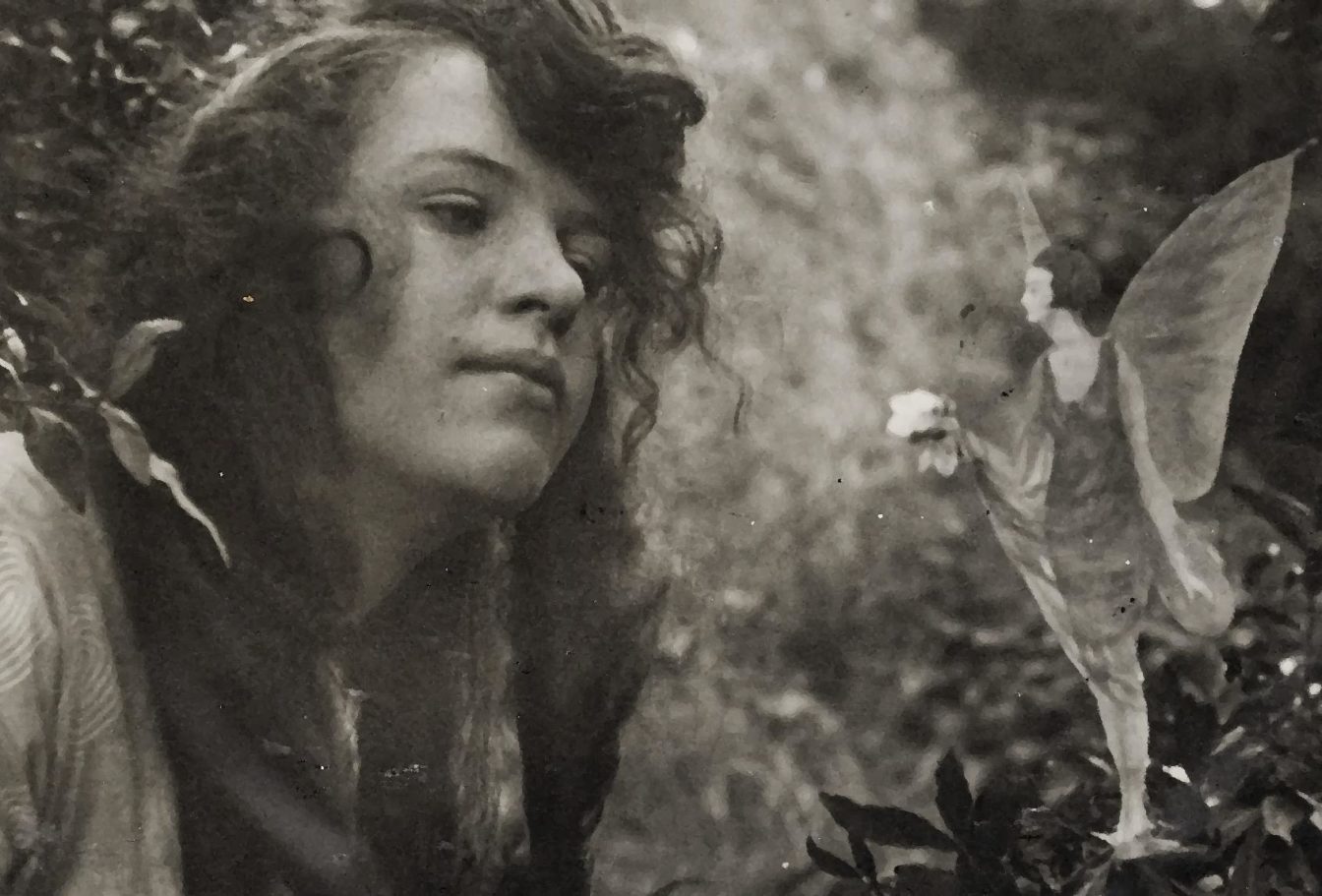
Portraying reality in art can be difficult, but in photography it should be easy as the camera records what we see. But reality can be manipulated. It is easier especially with digital image, people use photo-manipulation all the time. Cameras document what they see but as soon as you edited them, are they still documenting reality? What about if you change the exposure slightly or the contrast, is it still technically reality? The tableau genre is a an example of what may seem like reality but infect is a staged scene. Yes technically, it is a record of what the camera saw, but the actual scene has been staged, so it is intact a staged reality. Photo-manipulation is often used in advertisement, images of models are edited so they look flawless. Their skin is edited to remove any imperfections, some even make the models look thinner, this is not showing reality. It is difficult sometimes in photography to see what is real, but this has been going on for a while. The series of images captured in 1917 by Polly Wright is known as the Cottingley Fairies. They feature both Elsie Wright and Frances Griffiths. The images are so realistic, that people today even still believe them. This image (see fig. 2) features a young girl with what appears to be a fairy. People were convinced that these were real fairies, and it wasn’t until the 1980s that the photographers admitted they had faked the images using images of fairies cut out of a book. Whilst the images are what the camera saw, they are not depicting the a real scene of fairies.
The global age has paved the way for a plethora of technological advancement which allows us to communicate and share globally. This is also important for sharing artwork. Art now has a global audience. The internet is the perfect platform for sharing photographs, there are many photo-sharing websites. Artists are now using this format to share and market their work. Whereas previously artist may exhibit in a gallery, now they now can exhibit online to a wider audience. It is not just artists who benefit but people in general become more aware and have become more culturally diverse. But the internet does come with a few disadvantages. It is so easy to copy an image online, so copyright infringements can and do become an issue. There are billions of images, possibly even trillions, how can your images stand out in that volume. Whilst work is accessible from almost everywhere in the world, the numbers can sometimes be against you.
Bibliography
Art Gallery NSW. Postmodernism. At: https://www.artgallerynsw.gov.au/education/learning-resources/education-kids/photography/postmodernism (Accessed on 6th of July 2019).
Barthes, R. (2007) ‘Rhetoric of the Image’ In: Evans & Hall (ed.) Visual Culture: A Reader. London: Sage Publications Ltd. pp. 33-40.
Batchen, G. (1997). Burning with Desire: The Conception of Photography. USA: MIT Press.
Bate, D. (2010) ‘The Memory of Photography’ In: Taylor & Francis Online. 6th of September 2010. [Online]. At: https://www.tandfonline.com/doi/full/10.1080/17540763.2010.499609 (Accessed on 17th June 2019).
Benjamin, W. (2007) ‘The work of art in the age of mechanical reproduction’ In: Evans & Hall (ed.) Visual Culture: A Reader. London: Sage Publications Ltd. pp. 72-79.
Berryman, A. (2011). What is Modernism? At: https://ashleighberryman.wordpress.com/2011/01/31/what-is-modernism/ (Accessed on 6th of July 2019).
Bibby, M. The Cottingley Fairies. At: https://www.historic-uk.com/CultureUK/The-Fairies-of-Cottingley/ (Accessed on 12th of August 2019).
Brooks, A. (2002). Postfeminism: Feminism, Cultural Theory and Cultural Forms. London: Routledge, p. i.
Buchanan, I. (2010). ‘Nihilism’ In: A Dictionary of Critical Theory. Oxford: Oxford University Press.
Crimp, D. (19993) On The Museum’s Ruins. Massachusetts: MIT Press, p. 108-124.
Dillet, B. I. MacKenzie & R. Porter. (2013) The Edinburgh Companion To Poststructuralism. Edinburgh: Edinburgh University Press.
Ebert, T. L. (1991). ‘The “Difference” of Postmodern Feminism’. In” College English (Vol. 53, No. 8) pp. 886-904. [Online]. At: https://www.jstor.org/stable/377692 (Accessed on 16th of July 2019).
Edwards, E. & J. Hart. (2004). Photographs Objects Histories: On the materiality of Images. London: Routledge, pp. 1-15.
Encyclopaedia Britannica. ‘Poststructuralism’ [Online] At: https://www.britannica.com/art/poststructuralism (Accessed on 19th of June 2019).
Encyclopaedia Britannica. ‘Poststructuralism’. [Online]. At: https://www.britannica.com/art/poststructalism (Accessed on 19th of June 2019).
Green, J. (1978). ‘Photography as Popular Culture’ In: Journal of The University Film Association. Vol. 30, No. 4. [Online]. At: https://www.jstor.org/stable/20687447 (Accessed on 10th of July 2019).
Howells, R. (2011) Visual Culture: A Reader. Cambridge: Polity Press, pp. 183-206.
Irvine, M. Approaches to Po-Mo. At: faculty.georgetown.edu/irvinem/theory/pomo.htm/ (Accessed on 19th of June 2019).
Killen, B. (2010). Postmodernism – Deconstruction and Fine Art Photography. At: http://www.bobkillenphotographyblog.com/2010/06/postmodernism-deconstruction-and-fine-art-photography/ (Accessed on 10th of July 2019).
Kracauer, S. (1995) The Mass Ornament: Weimar Essays. London: Harvard University Press. p. 58.
Marien, M. W. (2006). Photography: A Cultural History (2nd edn). London: Laurence King Publishing Ltd. pp. 302.
McHugh, N. A. & P. Leaman. (2007). Feminist Philosophies A-Z. Edinburgh: Edinburgh University Press, pp. 100-103.
MDC. History of Modernism. At: https://www.mdc.edu/wolfson/Academic/ArtsLetters/art-philosophy/Humanities/history_of_modernism.htm (Accessed on 19th of June 2019).
P1. (2014) Postmodernist Art and Photography. At: https://www.photographicinspirations2014.wordpress.com/2014/03.31/postmodernist-art-and-photography/ (Accessed on 6th of July 2019).
Sekula, A. (2007). ‘Reading an archive: photography between labour and capital’. In: Evans & Hall (ed.) Visual Culture: A Reader. London: Sage Publications Ltd. pp. 181-192.
Tam, P. So Long As They Are Wild. Catherine Opie. At: Art Asia pacific.com/magazine/WebExclusive/SoLongAsTheyAreWild (Accessed on 24th of July 2019).
Tate. Art Term – Modernism. At: https://www.tate.org.uk/art/art-terms/m/modernism (Accessed on 19th of June 2019).
Tate. Art Term – Postmodernism. At: https://www.tate.org.uk/art/art-terms/p/postmodernism (Accessed on 19th of June 2019).
Tate. Art Term – Modernism. At: https://www.tate.org.uk/art/art-terms/m/modernism (Accessed on: 19th of June 2019).
Tate. Art Term – Postmodernism. At: https://www.tate.org.uk/art/art-terms/p/postmodernism (Accessed on 19th of June 2019).
Tate. Catherine Opie. At: htttps://www.tate.org.uk/art/artists/Catherine-opie-4641 (Accessed on 24th of July 2019).
The Art Story. Modern Photography. At: https://www.theartstory.org/movement-modern-photography.htm (Accessed on 6th of July 2019).
Tsui, E. (2018). Yosemite in all its intimacy: feminist photographer Catherine Opie’s first solo Hong Kong show features Western landscapes. At: https://www.scmp.com/culture/arts-entertainment/articles/2147211/Yosemite-all-its-intimacy-feminist-photographer-Catherine (Accessed on 24th of July 2019).
V&A. What is Postmodernism? At: https://www.vam.ac.uk/articles/what-is-postmodernism (Accessed on 19th of June 2019).
V&A. What is Postmodernism? At: https://www.vam.ac.uk/articles/what-is-postmodernism (Accessed on 19th of June 2019).
V&A. What is Postmodernism? At: https://www.vam.ac.uk/articles/what-is-Postmoderism (Accessed on 19th of June 2019).
V&A. What was Modernism? At: https://www.vam.ac.uk/articles/what-was-Modernism (Accessed on 19th of June 2019).
V&A. What was Modernism? At: https://www.vam.ac.uk/articles/what-was-modernism (Accessed on 19th of June 2019).
Willette, J. S. M. (2012). Postmodernism in Photography. At: https://arthistoryunstuffed.com/postmodernism-in-photography/ (Accessed on 6th of July 2019).
Woodward, D. (2016). The Artist using Landscape to make a Bold Feminist Statement. At: https://www.anothermag.com/art-photography/8790/the-Artist-using-landscape-to-make-a-bold-feminist-statement (Accessed on 25th of July 2019).
Figures
Fig. 1. Guerrilla Girls. (1989) Do Women Have To Be Naked To Get Into the Met. Museum? [Photograph – Online]. At: https://www.tate.org.uk/art/artists/guerrilla-girls-6858/who-are-guerrilla-girls (Accessed on 13th of August 2019).
Fig. 2. Wright, P. Elsie Wright and a Cottingley Fairy. [Photograph – Online]. At: https://www.historic-uk.com/CultureUK/The-Fairies-of-Cottingley/ (Accessed 13th of August 2019).
Brief
Write a 1,000 – 1,500 word essay that relates your current work (the work that you made or are making in ‘Body of Work’) to an aspect of visual culture discussed in Part One. This assignment is diagnostic.
Preparation
I started by reading through my course work and then researching each visual culture. I created a mind-map with reasons why my body of work fits into each category. I then looked at my research and felt that my work fitted into postmodernism better than any of the others.
Here is my mind-map.
Here is a link to my research.
Research
You can find my research under the drop down menu for this assignment or by clicking the following link:
Assignment Reflection
You can find my assignment reflection under the drop down menu or by clicking the following link:
Assignment One
Here is my assignment:
Tutor Feedback
Here is a link to my tutor’s feedback for this assignment and also my comments and how I am responding to the feedback:
Assessment Criteria
Demonstration of subject based on knowledge and understanding
I have decided on my topic for my body of work. I read through the course work and decided to research each visual culture, so that way I could see which my work fits into. I made a mind map to keep my ideas together and so I could see the links. In my essay I explained why I felt my work fit into each category and even put forward an idea that my work would fit better into the postmodern feminism category.
Demonstration of research skills
I researched each visual culture in order to understand them. This allowed me to see in which my work would fit into. I feel my research is evident.
Demonstration of critical and evaluation skills
In my essay I gave reason to why my work would fit into each visual culture but I also gave my reason as to why I felt that it didn’t fit completely in. I was critical of where my work would ultimately lie. I went a step further and put forward another visual culture which I felt fitted my work better, which is postmodern feminism. It is a sub-category of postmodernism but I felt I couldn’t complete this assignment without bringing it into play.
Communication
I felt I communicated my idea plainly and in a methodological way. I spilt my work up into section so I could discuss each part before moving on. I believe I wrote my ideas out clearly and concisely.
 Georgina's Contextual Studies